You may have heard the buzz – Google is rolling out a new analytics package (version 4) and the existing analytics is being retired. This means that some changes will need to be made if you wish to continue collecting data from your site in your Google Analytics account. Analytic data is very important to us so we’ve been rolling out and testing the new “GA4” all year and getting more comfortable with it every day.
The new package is fundamentally different than the past version and much of the familiar interface has changed. New terminology, reports and features can make 1:1 comparisons tough, but at the end of the day it still tracks the important things and offers some exciting opportunities for more robust custom reporting.
The amount of change required depends on several factors, the most significant of which is the age of your current tracking code. If you are actively tracking custom events or conversions, those will have to be re-thought out as well.
There are some good tutorials out there, however we can assist with transitions if code is not your thing. We can also take the opportunity to create some custom events to track activities on the site you really care about. If analytics are important to you, we can build dashboards to keep track of the areas you are spending on to promote.
The most important part of this message is IF you’re transitioning from the old to the new Google Analytics 4, it needs to be done by the end of June this year. We just wanted to make sure that you are aware and we are here to help if you need us.
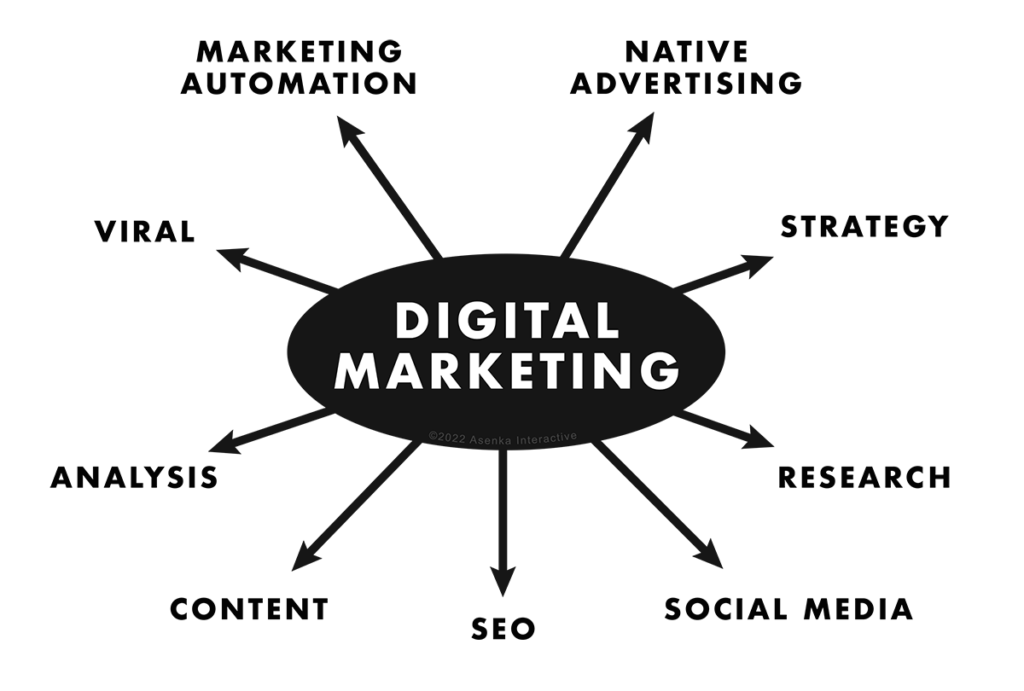
A graph showing various elements pertaining to Digital Marketing: Market Automation, Native Advertising, Strategy, Research, Social Media, SEO, Content, Analysis, and Virality
Spring-forward with some marketing success solutions for 2021
Some helpful tips to help your website not just gain attraction, but keep it.
In 2021, let there be no mistake: Google’s search algorithm is getting smarter. With every year, comes a new way for Google to figure out what websites are deemed to be on the prestigious first page. With the digital eco-system ever evolving, here are 7 tips for your Spring of 2021 to consider to make sure you are ahead of the curve and creating the best marketing strategy for your website and brand.
Strategy:
Doing research into your own industry and your competition will always give you the upper-hand. What is the competition looking like? Why are people engaged in a specific product and compare why your product is better. Marketing just isn’t about clicks, but it’s about understanding where your prospective customers are online and how to get their eye on your website. Once you have that idea in mind, it’s time for you to look at other questions, such as “Is our branding resonating?” “Would the demographic that wants my product engage on my website?” These are are all valid questions and all things that can be fixed. The more research you put in, the more resonating you have to effectively market your brand.
Keyword Research:
Now you know your niche, but the real question may be, how are people searching for what you have to offer? Some people may be searching for resources near them. Others may not be sure of what exact product they’re looking for, but are trying to find out what product is reviewed as the best. Others might be asking a “why” or “how” question in your industry. All of these search results, can benefit you by creating proper keywords for your website. Understanding this, specifically, is a make or break for most branding campaigns. These specific keywords will give you a way to differentiate your brand/organization from the competition. If you want to take a test-drive and see how this plays a huge role in efforts to attract prospective consumers & clients, feel free to try Neil Patels, Ubersuggest. It’s a great first step to understanding the importance of key-search.
Better Content, Better Rankings:
Your company has a solution. A customer is looking for an answer. If you are putting out content that provides practical value to prospective customers, you are doing three things in this very moment: You are engaging someone who may be a future customer, you are giving them free information that truly is helping them and you are giving google a chance to see how long that person stays on your site. The more creative and practical the content the more engaging (images, videos, blog posts with SEO in mind), the less bounce rate your website will have. This tells Google that your website has no business being on page 8. If writing isn’t your thing, you can always work with a professional copywriter.
Social Platforms:
Social media is the first thing people think of as a way to boost their signal and get their message and their brand across to others, as effective as possible. While platforms are definitely a cornerstone for digital marketing, if you are new, try one out one at a time. Think of each platform as a means to connect a client to your services, for a specific demographic. If you’re able to see which social media platforms work the best for you, remember to think of them as “parent platforms”. Yes, we’re talking the Facebook and Instagrams of the world. However if your clients are going somewhere else to find what you are looking for, don’t let that stop you. For instance, after you do research and find that most people are buzzing about your industry on LinkedIn, then by all means, get on there and start engaging. But as a word of caution, always try to explore different platforms independently to get a better grasp at which platforms are working for you and which ones are merely, confetti. If you find out that you’re not getting any views or likes on Pinterest, it may just be because your customers are for the most part, elsewhere. Research your industry on each platform and you’ll come out with a better understanding as to where your viewership lays.
User functionality & Speed:
A fast website sounds like a no-brainer, but let’s take a deeper dive. If a user searches and sees your website come up, reads the description in google and clicks on it, but spends more than 8 seconds waiting for your site to load properly, you’ve already lost that user. There could be several reasons. Maybe your site is beautiful on desktop, but you haven’t been making your website mobile-friendly, a priority. Maybe your on a slow server with large images o just need a re-design. This also includes readability, anywhere within your site. If a person can scroll around and find the content they are looking for quicker, and can read it without it looking noisy, you’ll be able to keep people on your website.
Our mentality is customer first, Google second:
Always create a website with you customers in mind first, but with Google as an onlooker. This means that you are creating content with the purpose of helping prospective customers as well as ranking well on search engines. Have you followed simple SEO rules? Does your site have strong backlinks? Are you relevant to the terms people are searching? Just use google search to see how you are doing. Pretend you are a great prospect and search what they would. See how you rank to get a good idea of your strengths and weaknesses in your digital landscape. Learn the best SEO practices and keep in mind that the fundamentals aren’t overtly changing, despite the massive push for digital in the last year.
Keeping these tips in mind will definitely strengthen your digital marketing efforts for 2021. If you need extra help on developing your site or traffic growth & measurement, please feel free to set up a free strategy call with us anytime.
We’re always excited to hear what you are planning or to help you plan it!
As the world is scrambling to understand how to be safe and what life will look like in the short and long term, business are scrambling to stay afloat amidst daily changes to rules and customer behavior. So how does one effectively market in this new climate? The reality is, we don’t really know. These times of crisis drive new ideas and new solutions, some of which will fail and others that will open new industries.
Let’s explore some ways to continue to reach out to your customers, provide new services, and few new clients or even new markets. For now we’ll focus on using the same tools we have now to connect with your market in the “new normal”.
Digital
Email: If your inbox is anything like mine, it’s flooded right now with messages about COVID-19 from lists that I haven’t heard from in years. Most of these emails are full of information that doesn’t effect me at all, but one company took the approach of giving some very good practical tips of staying entertained and engaged while stuck at home with the family. I read every word. This business was not in the entertainment space at all which made it all the more “real”. Some thoughts to consider when doing an email blast in the next few weeks:
Keep it short
We are all in this together, so write from that perspective
Give helpful info, not too promotional, unless what you sell is particularly useful right now
Ads: People are searching for things they probably never have before and any residual contingent of the online shopping-timid are finally taking the plunge. Homes are crowded, kids are struggling with technology, many are recently jobless. Can your products or services be a help, if so, you might consider running some ads for quick visibility. TIP: Don’t use coronavirus or COVID-19 in your ad text or it likely won’t show on Google.
Social: So many meetings are moving to Facebook live or Zoom or whatever. So many groups are forming for online discussions. Personally, I’ve found that these online meetings have taken existing business relations a little deeper. There’s something about “being” in another person’s house that takes a relationship to a slightly different place. These are generally easy to use well worth jumping into for individual client meetings, or larger events. Make it easy for people to reach out and request or even start a meeting.
Video: Quick video clips keep things real and offer an opportunity share your environment with your market. Sharing on social or on a website, or even short ones via email or an email campaign are a great way to stay top of mind. As with other things, keep it short, helpful, relevant, and not too sales-y unless you have a great idea or product. Home grown videos are OK for some uses, but you may want to go professional depending on how they’ll be distributed.
Webinars: So many meetings are moving to a video chat model, but consider a webinar to schedule a conference or if your audience is large. It’s a great format and in some cases, you can re-purpose the content for future meetings, paid or unpaid.
Website: Keep things updated here, any major scheduling changes or differences in the way you’ll be doing business should be front and center. If you aren’t a regular blogger, this could be a good time to get started.
Offline
Just because people aren’t out and about as much doesn’t mean there is not opportunity. People are still outside, walking and exercising in open areas. People are still food shopping and going out for other necessities. While I don’t think this is the time to invest in billboard ads, maybe something less common like skywriting or those banners you always see at the beach could gather lots of eyeballs.
Postcards: People are still getting mail, and with the increase in digital communication, the good ‘ol mailbox might be a great way to get a specific message out, especially to a small local area if that’s your market. If you are really slow, you could even go house to house, (mailbox hangers) but check the legality on that in your area and obviously make sure you are practicing any applicable safety measures like gloves, distancing etc.
Flyers: If you are a local retail company that can stay open, it’s time to team up with others in the same boat. Co-promote with flyers in each other’s businesses, maybe the larger grocers or pharmacies would be willing to keep some of your flyers in their stores as well. Buy a display rack for your store and invite other local business to provide you with flyers to display. Reciprocity is a powerful thing and likely they’ll reciprocate and do the same.
Signs: Grab some lawn signs that say you’re still open, or that you are offering curbside delivery. Let people know what you have available for them. Maybe even look into some neon window signs (is that even a thing anymore?) Light can be powerful and grab attention. Decorate the outside of your store with holiday lights and shine them bright.
Calls: Spend the slow time calling clients or regular customers. They are likely feeling disconnected and a call just to see how they are doing and how you can help could be just what they needed. It may not bring in revenue that moment, but the relationship strengthened will be worth much more in the long term.
Have fun. That doesn’t mean be disrespectful or take the situation lightly. But with a heavy cast over much of people’s lives, a little levity helps remind people we are all still human and that there is another side to this. We just can’t see it clearly yet.
If your business is struggling and you want to talk about how any of these ideas might apply to you, we are available for a free, 30 minute brainstorming session. There’s no commitment but if our ideas and experience can help you through this time, we’d love to help.
Google Ads is a paid platform for serving up ads primarily on search result pages but also on other sites and videos. This can give you exposure to the plethora of users that search Google every day. Google makes it very simple to create ads by using keywords to define who you want to show your ads to. The hope is that you’ll get tons of new business when you start running these ads, but that is not always the case. In fact, unless you have some experience in setting this up, it’s likely that Google will be the only one getting the new revenue… yours.
If you are not familiar with the way these search ads work, let’s take a moment to cover the basics. You pick the keywords that you want your ads to show for. You write the ad text. You set the budget of how much you’ll spend each day. You set the geography and some other details of when and where you want your ad to show. Google will show your ads when related keywords are searched. When your ad is clicked, the user goes to your site and you pay Google. How much a click costs depends on how many other companies want to be shown for those same keywords. The more competition, the more it costs. Now we could write a blog post of each of those steps, but that’s the basics of how it all works.
This is all fine and good on the surface, but when you peel back the onion one layer you see that much of the traffic to your website is not looking for what you are selling. Let me explain why, and then we’ll get into a solution. The keywords you type in Google when you set up a campaign will show your ad to anyone searching for those words OR any closely related words. Google does this to make sure they capture all the possible related traffic. This means when you select the keywords plumbing company that your ads will show for someone searching plumbing company near me, plumbing company jobs, plumbing company supplies, even drain cleaning service,free plumber service coupons or worst plumbing company could qualify as a close variant. Ouch. Obviously paying for clicks on these search phrases would NOT be recommended.
4 Steps to Good Traffic
All is not lost though. There’s a solid 4 step process to putting together a campaign that is both targeted to good traffic, and also competing on less general (more specific) terms whose clicks are generally less expensive.
Step 1 – Group your keywords
This is good practice for aligning the right message with the right terms. When someone is searching for hairdresser for women, you’d likely want them to see different key points than hairstylist for men, even though your business may service both. Ideally, the page the ad directs them too is also unique content, but that can come later. Theoretically, good messaging will help to deter users who are looking for something else from clicking on your ad. However, in our experience, we believe that very few users actually read the ads. Which leads us to the next point.
Step 2- Use Broad Modifiers
This is a tricky part but makes the biggest difference. As we saw above, broad match keywords will trigger your ad for too wide a range of terms. A Broad Modifier is a way to tell Google to require that every word in this phrase must be present. You simply add a + sign before each word that needs to be required. For instance +women’s + hats + scarves will show ads for women’s hats and scarves but not women’s clothing, which would have shown as a broad search term. You can be even more specific requiring certain phrases or even an exact match (which isn’t really exact, but close). Google has more information on this here.
Step 3 – Monitor Actual Search Terms
Google ads will show you the exact terms that people typed in that triggered your ads and then clicked on them. This is the best way to determine how clean your campaign is setup. When you look at this list, you should see queries that you think are reasonable for what you are selling. If you don’t, you’ll need to go back and clean up either your keywords or add something called negative keywords to help clean up the traffic you are paying for.
Step 4 – Negative Keywords
So if you like most of the traffic coming through from your broad modified keywords, but still a few a leaking past that you don’t like, you can add negative keywords which tell Google, if this word is present, DON’T show this ad. It’s a powerful concept when paired with narrow keyword set. Say for instance the terms all looked good, personal injury attorney, lawyer for injury, on the job injury lawsuit, but every now and then you also had clicks to your site from terms like personal injury lawyer jobs, or personal injury law career. This is a perfect place to add negative keywords for job, jobs and career, careers. In no cases would you want to show ads for those searches so you can keep your other settings as is and just cut out the job seekers.
When you do this well, you should see that while the overall amount of clicks you are getting may have dropped, the conversions for the people you are paying for should go up because they are exactly what you are looking for. The other thing you might see is that your cost per click has dropped because the very broad, highly competitive terms that everyone is bidding for are no longer on your radar. The searches you are paying for are more specific and likely less competitive. The real goal regardless of traffic or cost per click is to get your cost-per-conversion down. This factors in all the fall off in the process and lets you see, on average, how much you are paying before one person completes a desired action, like filling out a form.
Keep these tips in mind as you are managing your campaign. This is not a promise of success for the campaign, there are so many factors to deal with. It is however, a way to make sure that in the process, you don’t lose your shirt!
Fill out the form below to download your Brand Profile PDF